Quick summary: Couples therapy at Vital Mental Health in Roseville, MN starts with a first session focused on understanding your relationship, not fixing everything at once. Sessions are available in-person or by secure telehealth, most major MN insurance plans are accepted, and the practice’s private-pay rate is $190 per session. Liz Lee and Yannick Morris lead the couples program using an attachment-based, trauma-informed approach, and support couples working toward reconciliation as well as those navigating a respectful separation.
Deciding to try couples therapy is often the easier part. Figuring out what actually happens once you walk through the door, or log into a video call, is where most people get stuck, and most local practice pages don’t answer it. This guide walks through what to expect from couples therapy at Vital Mental Health in Roseville, MN: who it’s for, what session one looks like, what it actually costs, and how to decide if it’s the right next step.
Is couples therapy right for us?
Most couples don’t arrive at therapy because things are mildly off. They arrive because something specific has already tested the relationship, and by the time you’re searching for a therapist, you’ve usually already tried to fix it on your own.
Here’s what that often looks like, and why it tends to persist without support:
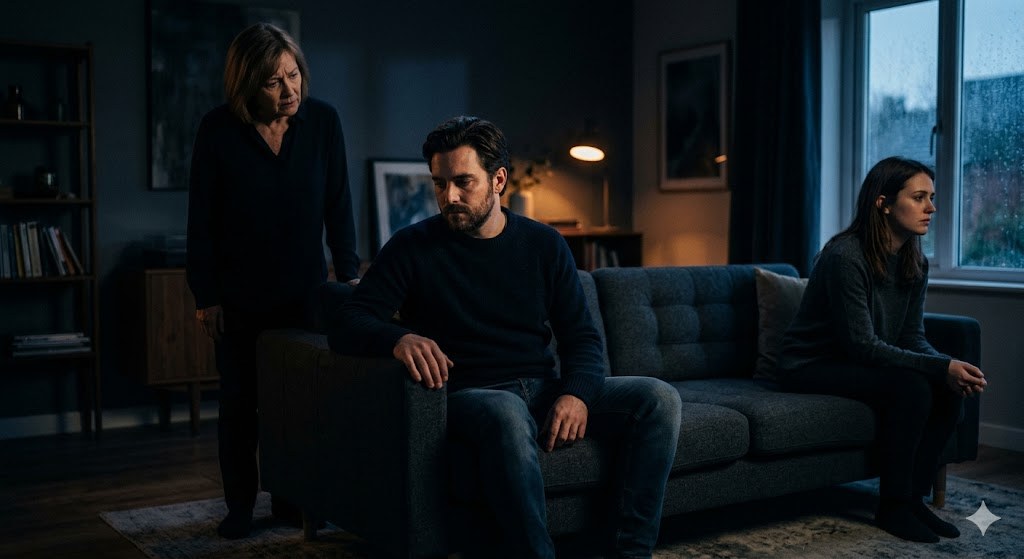
- You’re stuck in the same argument on repeat. The topic changes, but the pattern doesn’t. One person pursues, the other withdraws, and neither of you feels heard. That’s not a communication failure; it’s an unaddressed relational cycle, and cycles don’t resolve themselves through repetition.
- Trust has been damaged by infidelity or commitments that weren’t kept. Rebuilding trust after betrayal requires more than an apology. It requires a structured process for both partners to work through what happened without the relationship staying stuck in it.
- One or both of you feels emotionally distant or shut down. Emotional withdrawal is often a nervous-system response to feeling overwhelmed, not a sign that someone has stopped caring.
- A high-stress career or major life transition is straining the relationship. Military service, first-responder work, new parenthood, or job loss all put real pressure on a relationship’s baseline coping capacity.
- Substance use or compulsive behavior is affecting the relationship. This kind of strain often calls for support tailored to betrayed and affected partners alongside the couple’s work.
If two or more of these sound familiar, couples therapy is a reasonable, proactive next step, not a last resort reserved for relationships already past the point of repair. Attachment-based couples therapy is also one of the more rigorously studied approaches in couple psychology, with a peer-reviewed meta-analysis finding preliminary support for lasting relationship improvement that holds up after treatment ends (Beasley & Ager, 2019, PubMed).
What happens in your first couples therapy session?
Your first couples therapy session at Vital Mental Health is scheduled with both partners present, and your therapist will confirm session length and cadence with you directly. The focus is on understanding your relationship’s history and current concerns, not solving everything in one sitting, and your therapist facilitates without assigning blame to either partner.
Before that first session, you’ll complete intake paperwork through our online patient portal covering background, relationship history, and what’s bringing you in. Your therapist reviews this in advance so session time goes toward you, not paperwork.
What to bring and how ongoing sessions work
You don’t need to prepare a case or rehearse what to say. Come as you are. Your therapist will ask questions aimed at understanding the pattern underneath the conflict, not just the most recent argument, and will explain how often to meet going forward based on what you’re working through.
How couples therapy unfolds after session one
Session one is about understanding the problem. The sessions that follow are where the actual work happens, and it tends to move through a few recognizable phases.
Early sessions (roughly sessions 2–4) focus on mapping your specific cycle: the sequence of moves and reactions that repeats every time conflict shows up. One partner raises a concern, the other feels criticized and withdraws, the first partner escalates to be heard, and the cycle locks in. Naming this pattern out loud, together, is often the first real relief couples experience, not because the conflict is resolved, but because it’s finally legible instead of chaotic.
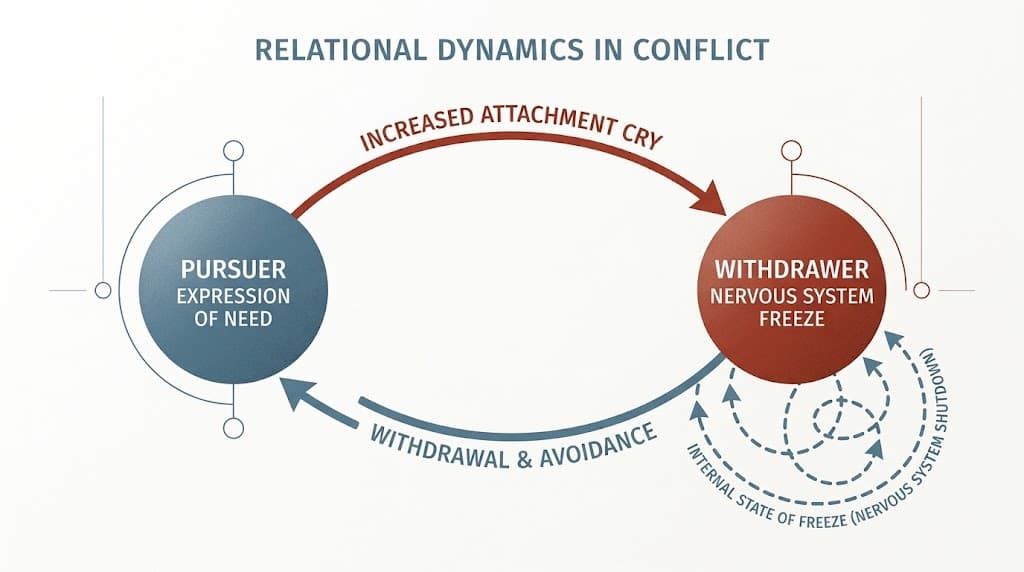
Middle sessions shift from mapping the pattern to practicing something different inside it. This often includes polyvagal-informed techniques for recognizing when your nervous system has shifted into fight, flight, or shutdown mid-argument, along with structured communication tools for slowing a conversation down before it escalates. This is also where deeper material, including betrayal, family-of-origin patterns, and unprocessed trauma, tends to surface, since it’s usually what’s fueling the reactive cycle in the first place. When individual trauma needs its own dedicated processing, your therapist may recommend pairing couples work with EMDR therapy.
Later sessions focus on consolidation: testing the new pattern in real situations between sessions, troubleshooting what didn’t work, and gradually spacing sessions further apart as the relationship stabilizes. Some couples conclude therapy here. Others choose ongoing, less-frequent check-ins to maintain progress, particularly if the original strain, such as a high-stress career or an addiction recovery process, is ongoing rather than resolved.
There’s no fixed number of sessions that applies to every couple. A recent, specific rupture often resolves faster than a long-standing pattern that’s been reinforced for years, and your therapist will revisit this timeline with you directly rather than lock you into a preset program.
In-person or online? How format works at our Roseville clinic
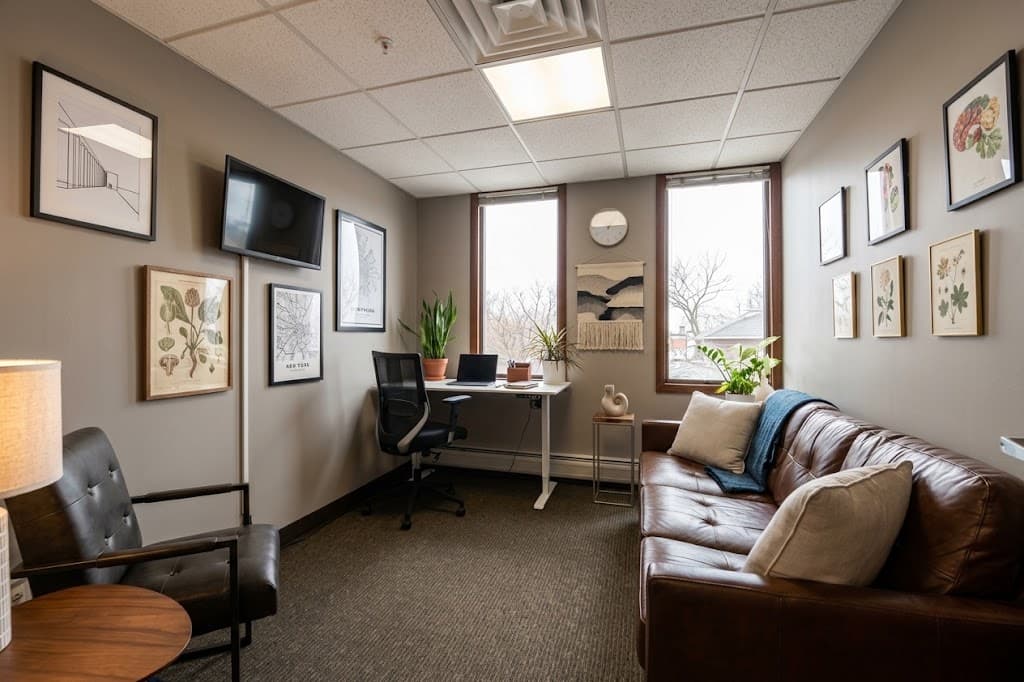
Vital Mental Health offers couples therapy both in-person at our Roseville clinic and through secure telehealth to residents anywhere in Minnesota. Neither format is a lesser version of the other; both use the same clinical approach and the same licensed therapists.
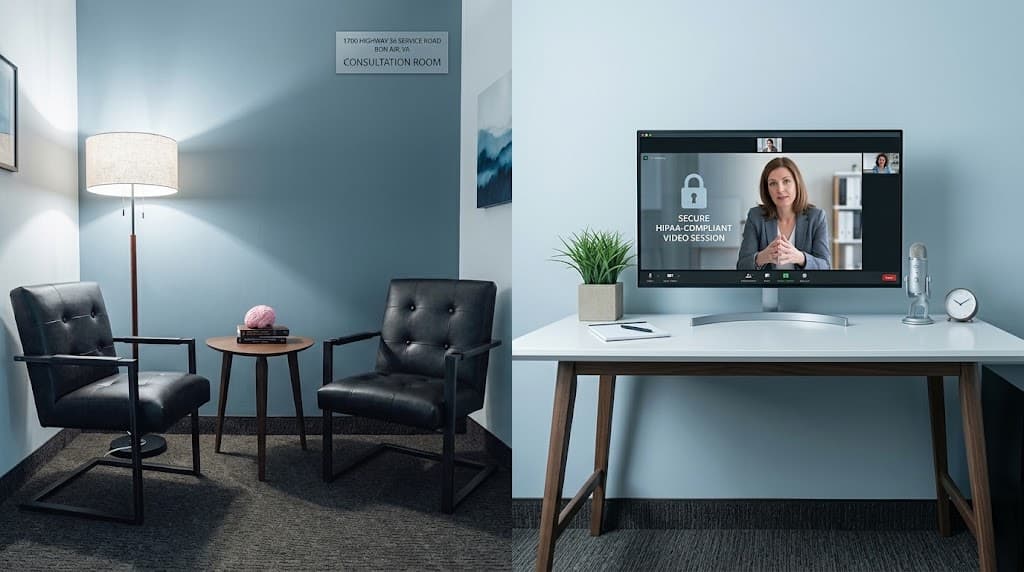
| In-Person | Telehealth | |
| Location | 1700 Highway 36 Service Road, Suite 880, Roseville, MN | Anywhere in Minnesota |
| Best for | Couples who want a dedicated, distraction-free space | Couples balancing work schedules, childcare, or distance from Roseville |
| Platform | In-office session | Secure, HIPAA-compliant video |
| Clinical approach | Same attachment-based, trauma-informed model | Same attachment-based, trauma-informed model |
Some couples split the difference, meeting in person when schedules allow and switching to telehealth around travel or a busy stretch. Both formats are billed and scheduled the same way.
How much does couples therapy cost in Minnesota?
Couples therapy at Vital Mental Health is billed like other outpatient mental health services and is in-network with most major Minnesota insurance plans, including Aetna, HealthPartners, Cigna/Evernorth, and Blue Cross Blue Shield. Our standard private-pay rate is $190 per session for clients who are out-of-network or prefer not to use insurance.
If your plan is out-of-network, we work with Mentaya, a reimbursement service that helps clients recover a portion of out-of-network costs without navigating the insurance claims process alone. Exact copays and coverage details vary by plan, so we recommend confirming your specific mental health benefits before your first session. Our team can help you sort through what your plan actually covers during intake.
Meet your couples therapy specialists
Vital Mental Health’s couples work is led by two licensed clinicians, each bringing a different lens to relational repair.
Liz Lee, MA
Liz specializes in attachment-based couples counseling, helping partners understand the patterns driving disconnection rather than just the surface-level arguments. She also offers a faith-integrated option for couples who want their counseling to reflect Christian values, an option not commonly available at other local practices. Liz’s practice does not include treatment for sexual addiction or pornography-related concerns; couples navigating those specific issues will typically work with Yannick Morris instead. Learn more about Liz Lee’s approach.
Yannick Morris, MA, LADC
Yannick brings a neuroscience-informed perspective to relational distress, helping couples understand the nervous-system patterns behind reactive arguments and emotional shutdown. His background in intensive outpatient care gives him experience with couples navigating higher-acuity stress, including recovery-related strain. Learn more about Yannick Morris’s approach.
What kinds of couples we work with
Vital Mental Health’s couples therapy is built around real strain, not general dissatisfaction. We work with couples navigating:
- Infidelity or broken trust. Rebuilding after a disclosed affair or ongoing dishonesty requires a structured process, not just time passing.
- Addiction or compulsive behavior affecting the relationship. When a partner’s addiction or compulsive behavior has strained the relationship, we address the relational impact alongside individual recovery work. For concerns involving sexual addiction or pornography use specifically, couples will typically work with Yannick Morris rather than Liz Lee.
- High-stress careers, including military service and first-responder roles. These careers bring unique strain, including hypervigilance, unpredictable schedules, and difficulty transitioning home, that generic couples counseling often doesn’t account for.
- Emotional shutdown, avoidance, or chronic conflict. Whether one partner has gone quiet or both are stuck in escalating arguments, the underlying pattern is treatable.
- Major life transitions putting pressure on the relationship. New parenthood, job loss, relocation, or health crises all test a relationship’s coping capacity in ways that are normal, not a sign of failure.
Bottom line: if your relationship has been tested by something specific, not just everyday friction, this is the kind of work we specialize in. Couples therapy here supports whatever direction is right for your relationship, whether that’s rebuilding together or parting ways respectfully. Please note this practice is not the right fit for polyamorous relationships.
Common questions before booking
What if only one partner wants to go? It’s common for one partner to be more hesitant than the other. Some couples start with one partner attending individually to work through the hesitation, while others find that a low-pressure first session eases the concern once the reluctant partner sees what it actually involves.
We tried couples therapy before and it didn’t help. Why would this be different? A prior experience that didn’t help is often a fit issue, not proof that couples therapy doesn’t work for you. Different therapists use different frameworks, and our approach centers on attachment patterns and nervous-system responses rather than surface-level communication scripts, which is a meaningfully different starting point for couples who’ve tried the latter already.
How many sessions will we need? This varies by what’s bringing you in. Couples working through a recent, specific rupture, such as a disclosed affair, often need a different timeline than couples addressing longer-standing patterns. Your therapist will discuss an expected course of treatment after the first one or two sessions, once they understand what you’re working with.
Is telehealth couples therapy actually as effective as meeting in person? Yes, for most couples. The clinical approach, session length, and therapist are identical; the only difference is the setting. Couples managing distance, inconsistent schedules, or discomfort with an office environment often find telehealth removes a real barrier without changing the quality of the work.
Key takeaways
- Couples therapy at Vital Mental Health starts with a first session focused on understanding, not immediate fixes.
- Sessions are available in-person in Roseville or by secure telehealth anywhere in Minnesota, with identical clinical quality.
- Most major MN insurance plans are accepted; the private-pay rate is $190/session, with reimbursement support available through Mentaya.
- Liz Lee and Yannick Morris lead the couples program; Liz does not treat sexual addiction or pornography-related concerns.
- Couples therapy here supports whatever outcome is right for the relationship, including a respectful separation, not repair only.
Ready to get started?
Reaching out for couples therapy isn’t an admission that something is wrong with you or your relationship. It’s a decision to get support before patterns get harder to shift. We work with couples at every stage of readiness, in a non-judgmental space, with discrete scheduling options and no pressure to have it all figured out before your first call. As a veteran-owned practice, we understand that asking for help can be its own hurdle, and we’ve built our intake process to make that first step as low-friction as possible.
Want a lower-pressure starting point? Download the free Relationship Field Guide for practical tools you can try before your first session.
When you’re ready to talk with someone, schedule a discrete consultation with our Roseville team.
About Vital Mental Health: Vital Mental Health, PLLC is a veteran-owned mental health clinic in Roseville, MN, specializing in men’s mental health, couples counseling, trauma, and addiction recovery. Learn more about our team.
Disclaimer: The information provided on this website is for educational and informational purposes only. It does not constitute formal medical or psychological advice, diagnosis, or treatment. Always consult a qualified healthcare provider regarding your specific mental health needs.
Licensing Boundaries: Our licensed clinicians provide telehealth therapy exclusively to residents located within the state of Minnesota. We cannot provide clinical services or teletherapy to individuals outside of this jurisdiction.
Emergency Support: Vital Mental Health is not a crisis response center. If you are experiencing an emergency or suicidal thoughts, call or text the Suicide & Crisis Lifeline at 988 immediately, or proceed to the nearest emergency room.